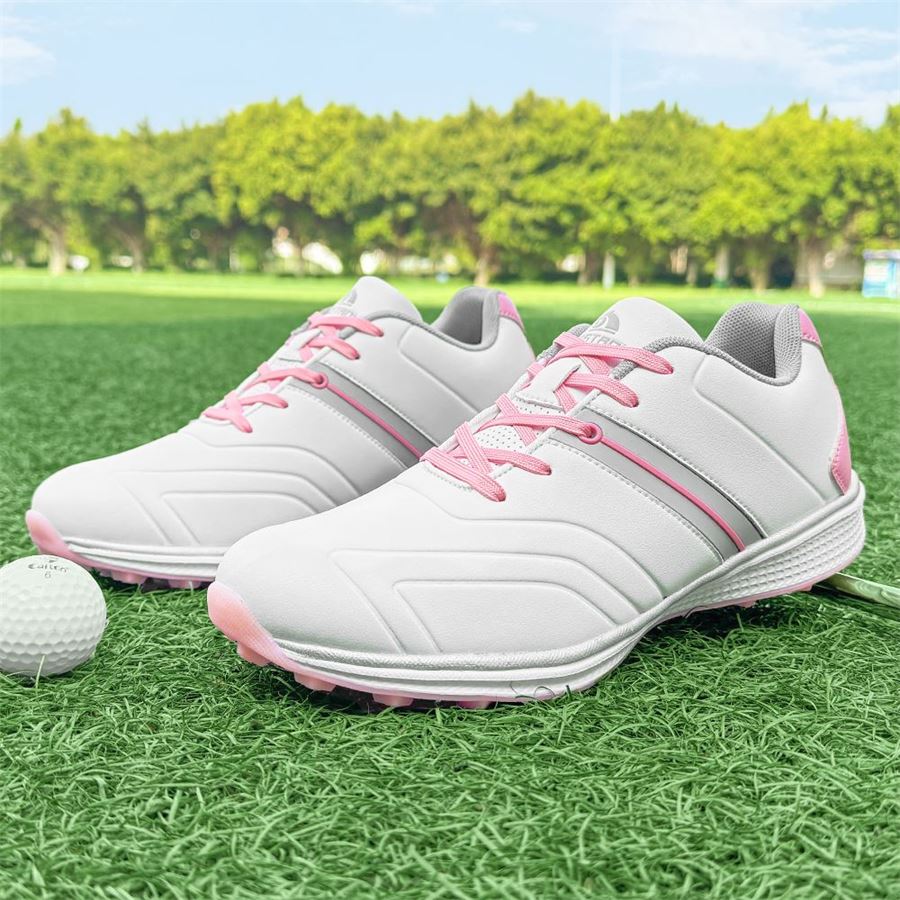
Golf shoes can be a strong category for Amazon and other online sellers: buyers search by style, color and size, and good listings convert well. But footwear also brings challenges — sizes, returns, packaging rules and inventory planning. This guide explains how to source golf shoes for Amazon FBA, from testing your first models to launching your own brand.
Step 1: Test before you commit
The biggest risk for a new online seller is buying too much of the wrong style. Start with a small test:
- Order stock models from 1 pair — mix models, colors and sizes to compare quality and fit.
- Choose 2–4 styles that cover different customers, for example a sporty spikeless model, a classic saddle and a women's style.
- Check reviews of similar products on Amazon to see what customers complain about — fit, comfort, waterproofing, sizing — and look for those points in your samples.
Step 2: Pick listing-friendly styles
Styles with several colorways make strong Amazon listings, because one listing can offer many variations:
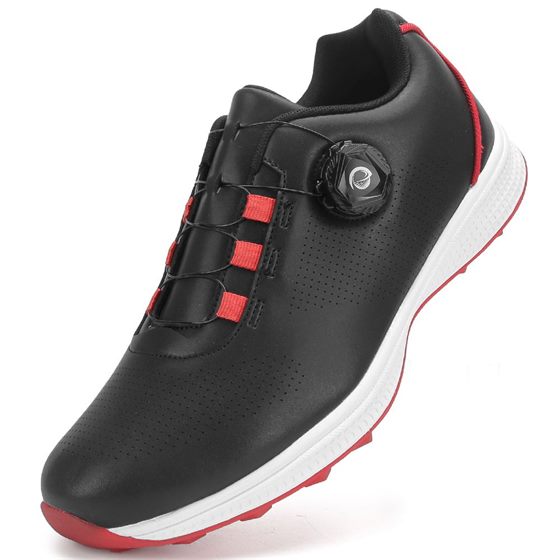
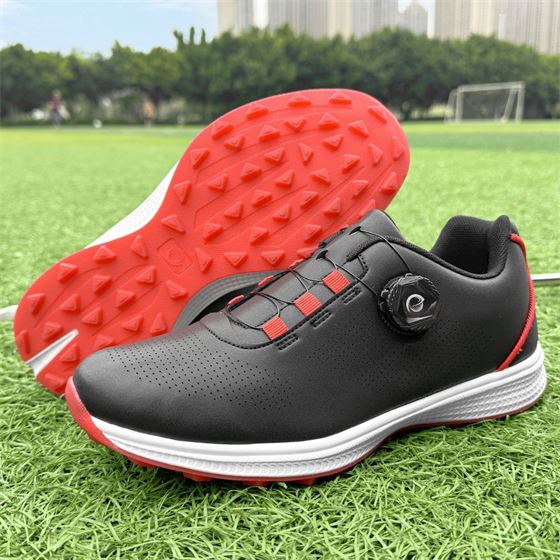
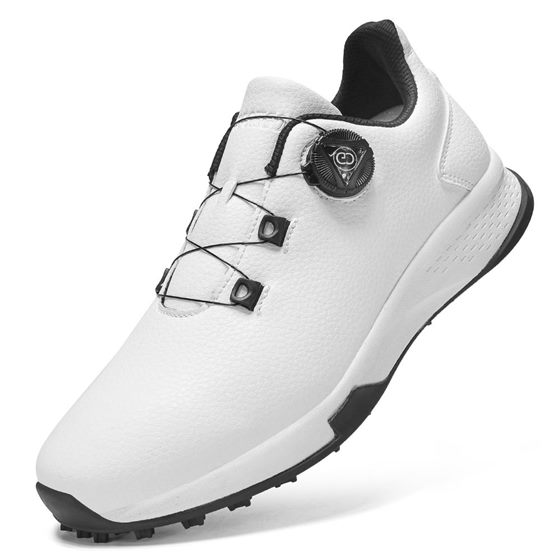
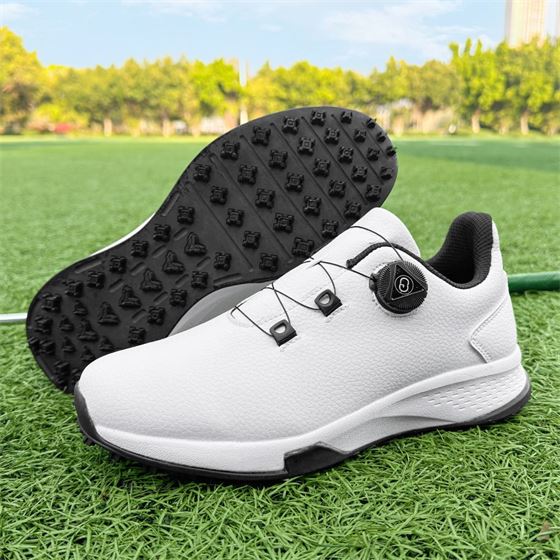
- X556 — men's spikeless with rotary dial in six colorways
- 516-2 — women's spikeless in six colorways, our most affordable women's style
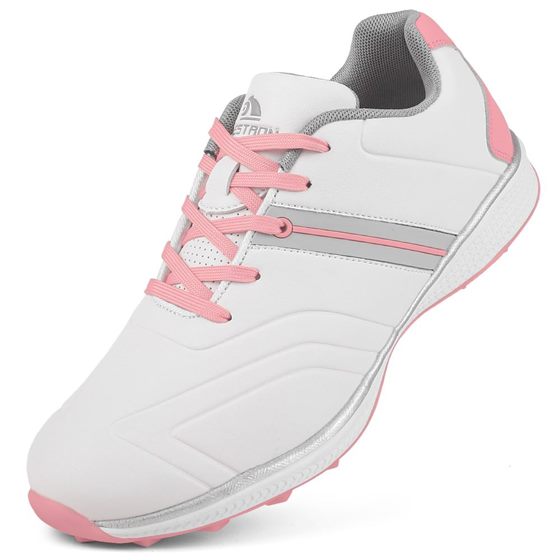
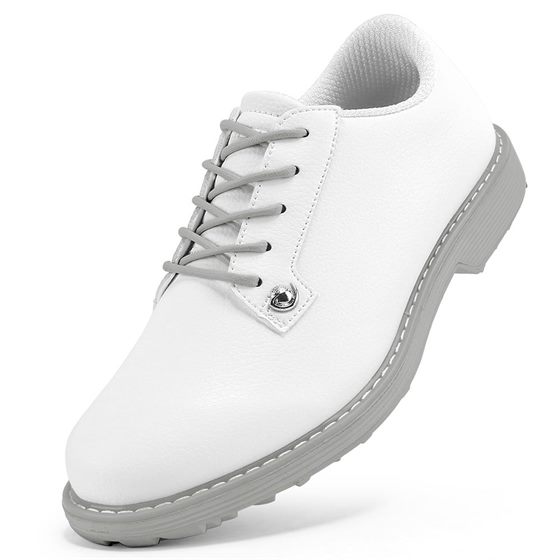
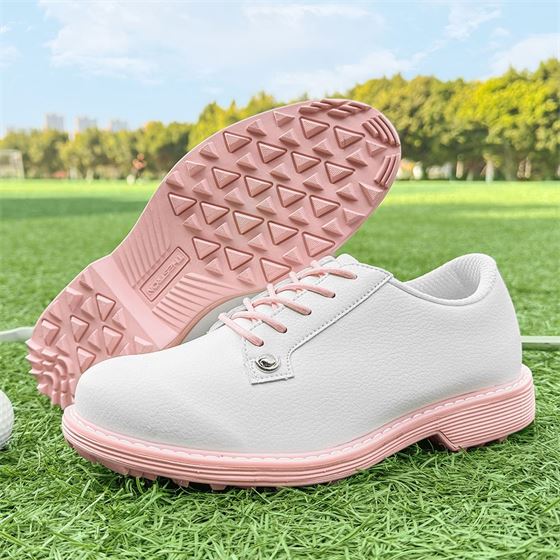
- K30 — women's white derby with five colored outsoles
- G8001 — unisex rotary-lace model in EU 36–48, one SKU for men and women
Prices for our stock models are about US$17.19 – 30.49 per pair FOB; see each product page for its FOB reference price, or download the full catalog.
Step 3: Product photos for your listings
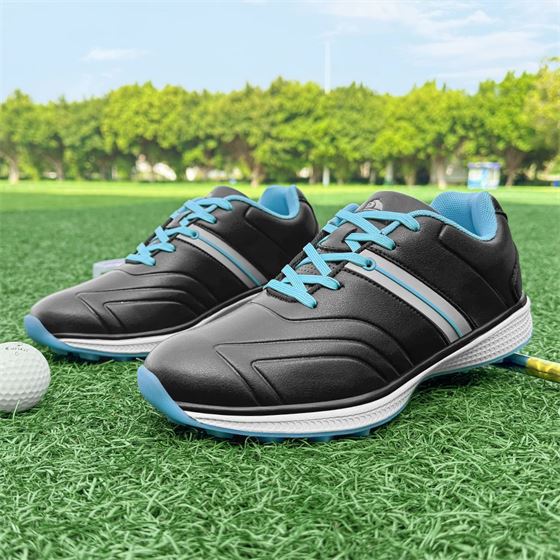
For our stock designs we provide white-background product photos (front, side, back, sole and detail views) and lifestyle photos on the golf course. That gives you a complete image set for your main image and gallery without a photo shoot. If you launch your own branded version, plan a shoot with your final samples.
Step 4: FBA barcodes and labels
We can apply your Amazon FBA barcodes and labels before shipping, so your cartons can go to the fulfillment center with less handling. Send us your label files and carton requirements with the order. Amazon's requirements change from time to time, so always check the latest packaging and labeling rules in Seller Central before you ship.
Step 5: Plan sizes and restocking
- Concentrate stock in core sizes and keep extreme sizes lean — our sizing guide includes an example ratio.
- Publish foot length in centimeters in your listing to reduce size-related returns.
- Use stock reorders to top up best-selling sizes quickly, and plan custom orders well before your peak season.
Step 6: Launch your own brand
Once you know what sells, put your own brand on it. Your logo on our in-stock models starts from 20–100 pairs, and fully custom orders from 300 pairs, with options for branded boxes, hang-tags and colorways. Your own brand protects your listings better than a generic product. Read our private label guide for the full process.
Costs to include in your calculation
| Cost | Notes |
|---|---|
| Product (FOB) | About US$17.19 – 30.49 per pair for stock models |
| Samples | US$250 per style, refundable case by case after a bulk order; shipping paid by the buyer |
| Freight and duties | Paid by the buyer — see our importing guide |
| Amazon fees | Referral and FBA fulfillment fees — check Seller Central for current rates |
Frequently asked questions
Can you apply Amazon FBA labels?
Yes. We can apply your FBA barcodes and labels before shipping. Please send the label files and your carton requirements with your order.
Can I use your product photos on Amazon?
For our stock designs, yes — we provide white-background and lifestyle photos for your listings.
What is the minimum order for Amazon sellers?
Stock models from 1 pair with mixed colors and sizes; your logo on stock models from 20–100 pairs; fully custom orders from 300 pairs.