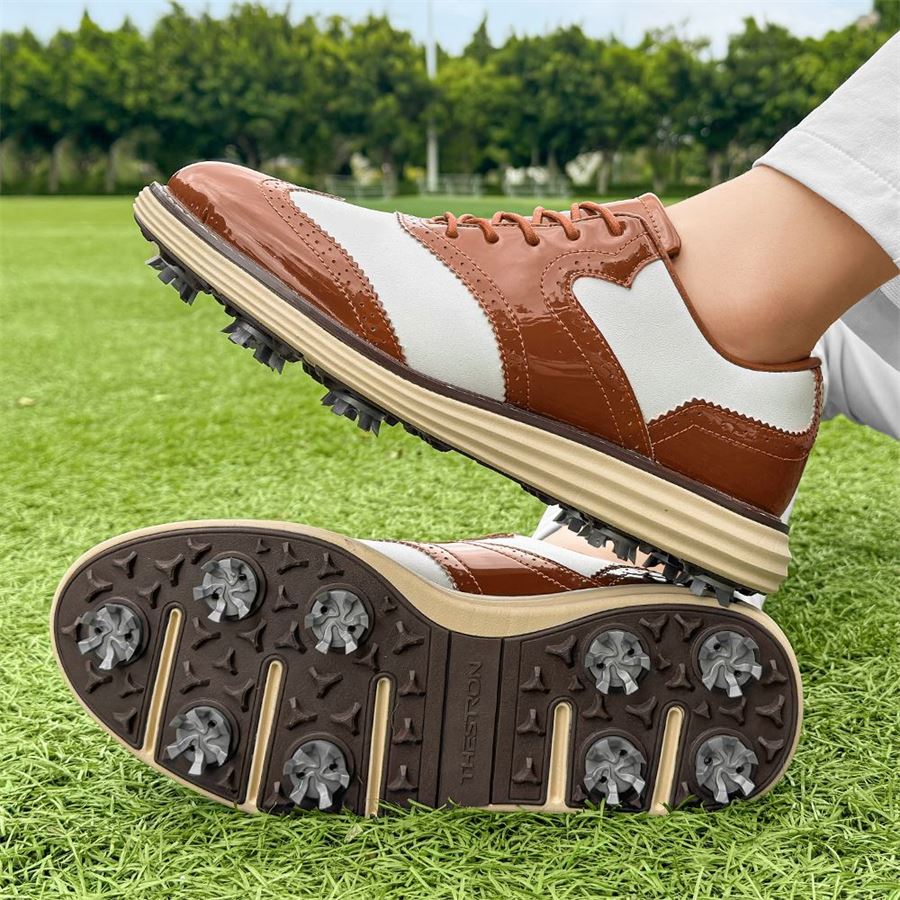
"Spiked or spikeless?" is one of the first decisions every golf shoe buyer makes — and it shapes your whole assortment. Both types have loyal customers, and most successful retailers carry both. This guide explains the real differences, who buys each type, and how to plan a balanced wholesale order.
What is a spiked golf shoe?
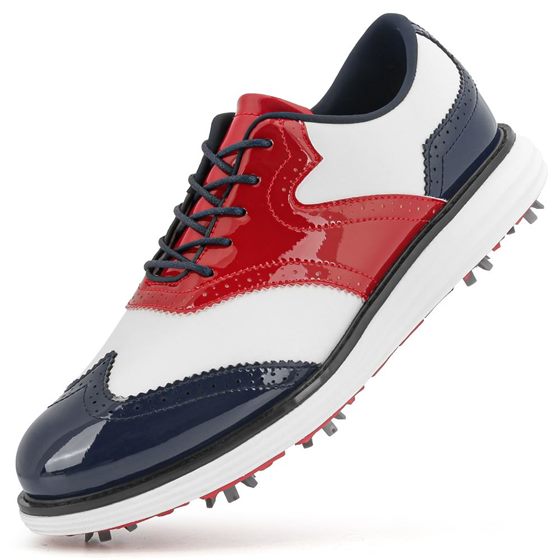
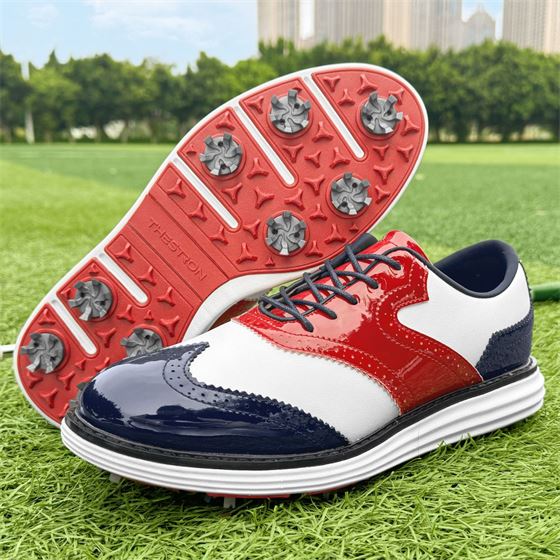
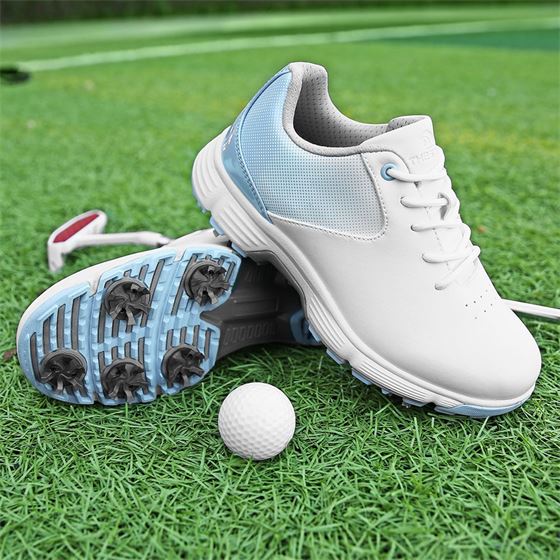
Spiked golf shoes have an outsole with receptacles for removable cleats — usually soft plastic spikes that screw or twist into the sole. Modern golf spikes are not metal; most courses require soft spikes to protect the greens.
Strengths:
- Maximum grip on wet grass, slopes and early-morning dew
- A stable base during a full, powerful swing
- Spikes can be replaced when they wear, extending the life of the shoe
Limitations: less comfortable on hard surfaces such as the clubhouse, car park or cart paths, and not designed for wear off the course.
What is a spikeless golf shoe?
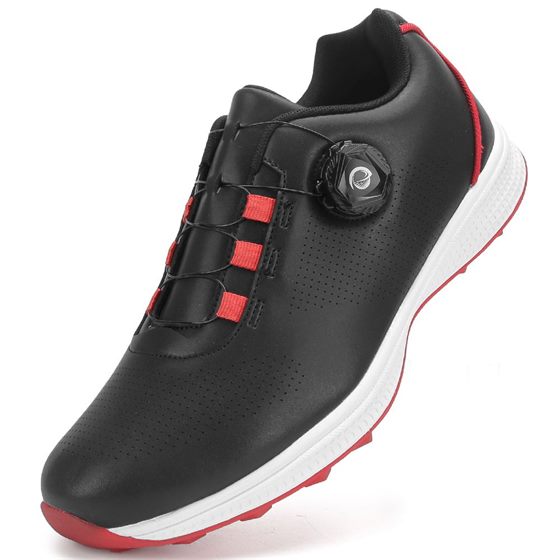
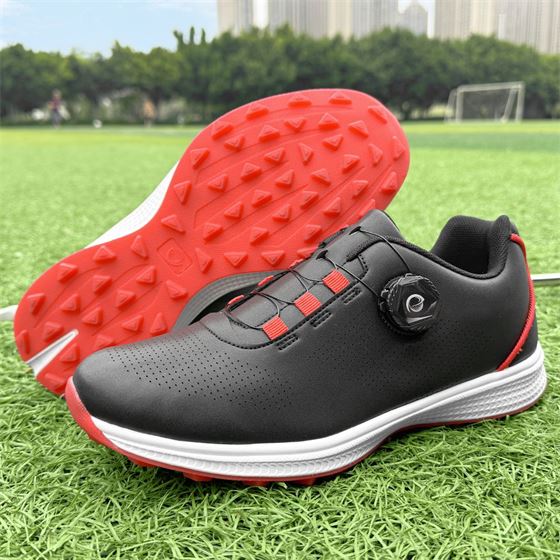
Spikeless golf shoes have traction built into the rubber outsole — small molded studs, lugs or nubs in a multi-directional pattern. There is nothing to screw in or replace.
Strengths:
- Comfortable for walking the course and for all-day wear
- Versatile: golfers can wear them to the range, the clubhouse and around town
- Often lighter, with a sneaker-like look that appeals to younger golfers
Limitations: slightly less grip than spikes in very wet or hilly conditions.
Side-by-side comparison
| Spiked | Spikeless | |
|---|---|---|
| Traction | Highest, especially in wet conditions | Good in normal conditions |
| Comfort off the course | Limited | High |
| Maintenance | Replaceable spikes | Nothing to replace |
| Typical customer | Frequent and competitive golfers | Casual, walking and younger golfers |
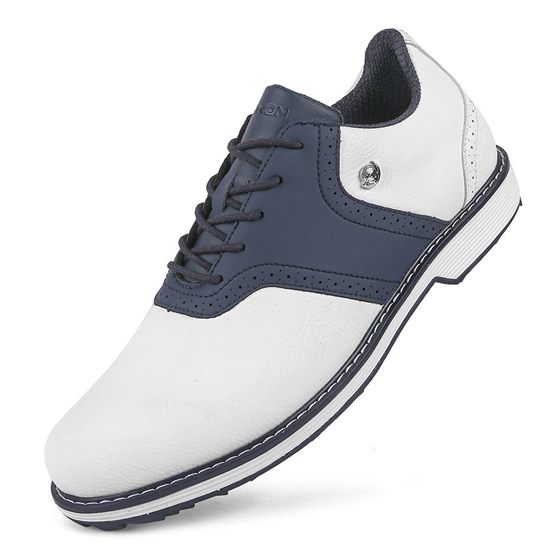
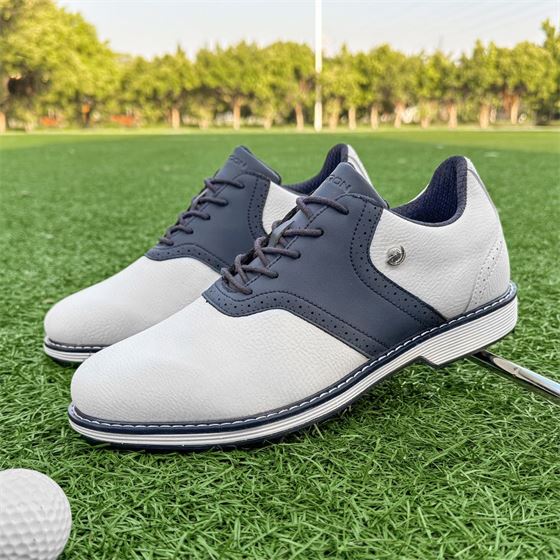
| Typical looks | Classic saddle, wingtip, performance | Athletic, sneaker-inspired, minimalist |
Who buys which?
Spiked: the performance and tradition buyer
Golfers who play often, play in wet climates, or play hilly courses tend to prefer spikes. Classic styles sell well here: think wingtip and heritage saddle designs for traditional pro shops and country clubs.
Spikeless: the comfort and lifestyle buyer
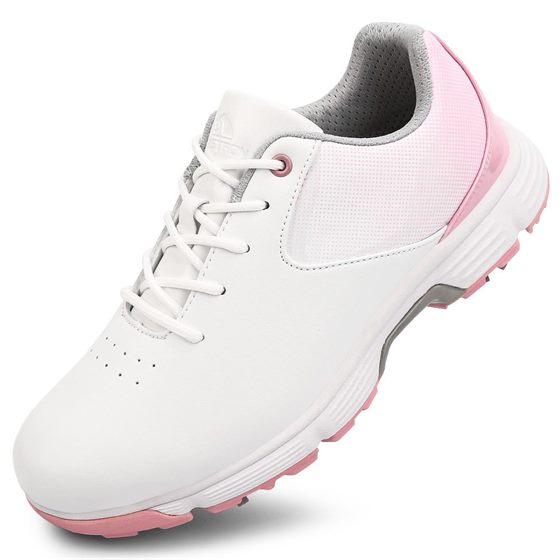
Spikeless shoes have become very popular with casual golfers, walkers and anyone who wants one pair for the course and after the round. Bright colorways and athletic silhouettes — such as our six-color rotary-lace model — work well for online sellers and sporting goods stores.
How to plan your assortment
There is no single right split — it depends on your market, climate and customers. A few practical guidelines:
- Pro shops and golf clubs often lean towards spiked styles, with a smaller spikeless selection for comfort-focused members.
- Online sellers and sporting goods retailers often lean towards spikeless, because the shoes also appeal to non-golf buyers and have fewer returns related to spike fitting.
- Wet or hilly regions sell more spiked shoes; dry, flat or resort markets sell more spikeless.
- Start with both if you are unsure, then let your sales data decide the next order. Small stock orders make this easy.
Don't forget the women's range
Women's golf shoes are one of the fastest ways to differentiate an assortment. Buyers increasingly look for feminine colors and genuine women's lasts, in both spiked and spikeless versions — for example our pastel gradient spiked and matching spikeless lines.
Frequently asked questions
Are metal golf spikes still used?
Very rarely. Most golf courses require soft (plastic) spikes to protect the greens, and modern spiked golf shoes are designed for soft spikes.
Can golfers replace the spikes themselves?
Yes. Replaceable spikes can be removed and fitted with a simple spike wrench, which extends the life of the shoe.
Are spikeless golf shoes allowed on all courses?
Spikeless golf shoes with golf-specific outsoles are generally accepted on golf courses. Rules can vary by club, so retailers should advise customers to check with their course.